
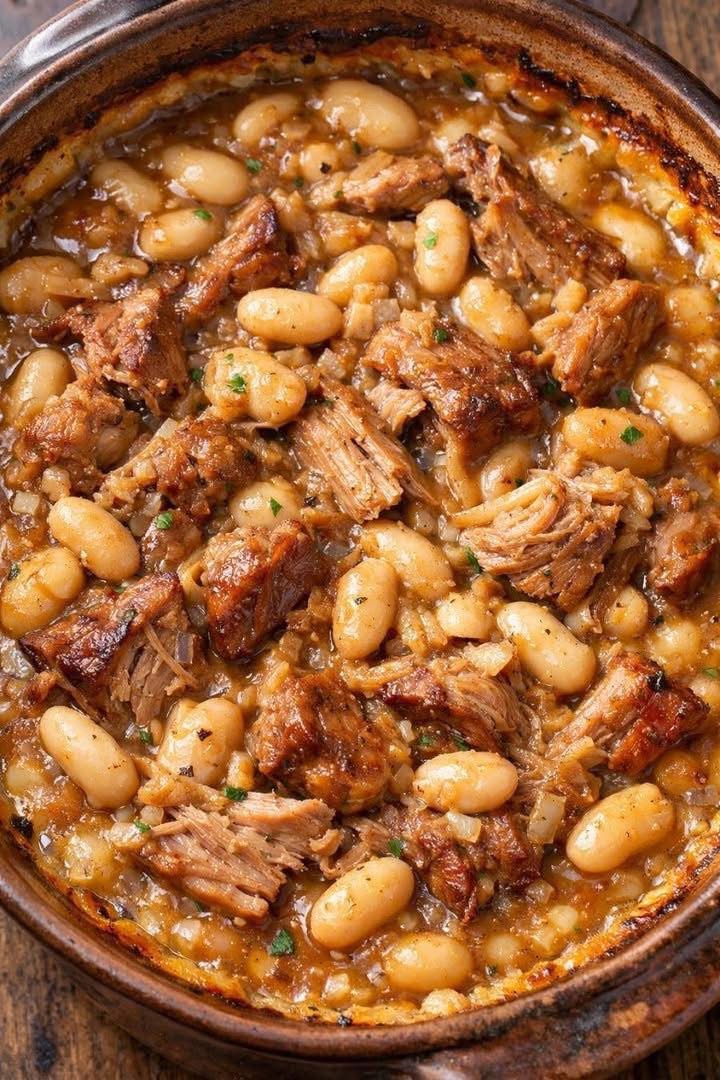
There are certain dishes that feel like they’ve been around forever — the kind of meal that has sustained families through hard winters, tight budgets, and long days. This Oven-Baked Pork and Dried Bean Casserole is one of those dishes. It’s humble, honest, and deeply satisfying, made with just a handful of simple ingredients that transform into something extraordinary when given enough time and gentle heat.
Dried beans were a pantry staple long before refrigeration existed. They’re cheap, shelf-stable, and packed with protein and fiber. Pork shoulder (or country-style ribs) is one of the most affordable cuts of meat, well-marbled with fat that renders during long cooking, basting the meat and beans from the inside. Onions add sweetness and depth. Broth becomes a rich, savory gravy.
This isn’t fancy food. It’s better than fancy. It’s the kind of meal that fills your kitchen with an irresistible aroma and your belly with warmth. Serve it with crusty bread or cornbread, and you have a complete, satisfying meal that costs very little but tastes like a million bucks.
Why You’ll Love This Recipe
-
Only four main ingredients– Beans, pork, onions, broth. Salt and pepper are assumed.
-
Incredibly budget-friendly– Dried beans and pork shoulder are among the most affordable protein sources.
-
Hands-off oven method – Layer, cover, bake, uncover, bake longer. That’s it.
-
Rich, savory gravy – The beans break down slightly, creating a naturally thick, silky sauce.
-
Fall-apart tender pork – Low and slow is the secret.
-
Great for feeding a crowd – Makes 8–10 generous servings.
-
Freezer-friendly – Make a double batch and save one for later.
Ingredients
-
Dried white beans (navy, Great Northern, or cannellini) – 1 pound (about 2 cups), picked over and rinsed
-
Boneless pork shoulder or country-style pork ribs – 2 pounds, trimmed and cut into 1½-inch chunks
-
Large yellow onions – 2, peeled and thinly sliced
-
Low-sodium chicken or pork broth – 4 cups (1 quart), plus more water as needed
-
Salt and black pepper – To taste (about 1½–2 teaspoons kosher salt and 1 teaspoon pepper)
Ingredient Notes
What kind of dried beans? Navy beans are small and creamy, traditional in many bean-and-pork dishes (like Senate bean soup). Great Northern beans are medium-sized and hold their shape slightly better. Cannellini beans are large and meaty, almost like a white kidney bean. All work beautifully — choose based on your texture preference.
Why soak the beans? Soaking dried beans overnight rehydrates them, significantly reducing cooking time and helping them cook more evenly. It also breaks down some of the complex sugars that can cause digestive discomfort. Do not skip this step (see quick-soak method in Variations if you forget).
What is pork shoulder? Pork shoulder (also called pork butt or Boston butt) is a well-marbled, flavorful cut that becomes incredibly tender when cooked low and slow. Country-style pork ribs (which are actually cut from the shoulder, not the rib cage) work beautifully too.
Why low-sodium broth? Dried beans and pork both benefit from salt, but you want to control the amount. Low-sodium broth lets you adjust seasoning at the end. If you only have regular broth, reduce or omit additional salt.
Can I use canned beans instead of dried? You can, but the texture and flavor will be different. If using canned beans, use 4–5 cans (15 ounces each), drained and rinsed. Reduce the broth to 2 cups and the baking time to about 2 hours total. Canned beans are already cooked and can become mushy with long baking.
Step-by-Step Instructions
Step 1: Soak the Beans
Place the 1 pound of dried white beansin a large bowl. Cover with plenty of cool water — at least 2 inches above the beans. Let soak at room temperature for 8 to 12 hours or overnight.
Drain and rinse the beans before using.
Why overnight?Proper soaking ensures the beans cook evenly and become tender and creamy instead of tough and mealy.
Step 2: Preheat and Prepare
When you’re ready to cook, adjust an oven rack to the lower-middle positionand preheat the oven to 325°F (165°C) .
Lightly grease a large, deep casserole dish (about 3–4 quarts). Stoneware or enameled cast iron (like a Dutch oven) works best for even heat distribution.
Step 3: Layer the Onions and Beans
Spread the sliced onions evenly over the bottom of the casserole dish.
Scatter the drained, soaked beans over the onions in an even layer. This base helps the beans cook evenly and lets the onions melt into the gravy.
Step 4: Season and Arrange the Pork
Pat the 2 pounds of pork chunksdry with paper towels — this helps them brown and cook more cleanly.
Generously season the pork on all sides with salt and black pepper(about 1½–2 teaspoons kosher salt and 1 teaspoon pepper is a good starting point; adjust to taste).
Nestle the pork chunks into the beans and onions, distributing them evenly so every scoop later has some meat and beans.
Step 5: Add the Broth
Pour the 4 cups of broth over the pork and beans. The liquid should just come level with the beans and pork or barely cover them. If needed, add a little water to reach that level.
Gently press down with a spoon to settle everything without breaking up the layers.
Step 6: Cover and Bake Low and Slow
Cover the casserole tightly with a lid or a double layer of heavy-duty aluminum foil (crimping the edges to seal). Trapping moisture is essential for softening the beans and pork.
Place in the preheated oven and bake for 2½ hours. This slow, covered bake allows the beans to soften and the pork to begin turning tender while building a savory, starchy gravy.
Step 7: Check Liquid Level and Stir
After 2½ hours, carefully remove the casserole from the oven and uncover it away from your face to avoid steam.
Stir gently from the bottom to loosen any beans that may be settling, and check the liquid level. The beans should be mostly submerged in a brothy gravy.
If they look dry or the top layer is not covered, add ½ to 1 cup of hot water or hot broth, stirring gently to combine.
Step 8: Finish Baking Uncovered
Return the casserole to the oven, uncovered, and continue baking for 45 to 75 minutes. Stir once or twice during this time.
You’re looking for:
-
The pork to become fall-apart tender(easily shreds with a fork)
-
The beans to be fully creamy inside(not chalky or firm)
-
The liquid to have reduced to a thick, spoon-coating gravy
-
The edges to be bubbling and slightly golden where the gravy meets the sides of the dish
Step 9: Rest Before Serving
When the pork is very tender and the beans are soft and creamy, remove the casserole from the oven. Taste the gravy and adjust seasoning with a bit more salt and pepper if needed.
Let the dish rest for 10 to 15 minutes. This short rest allows the bubbling to calm down and the gravy to thicken just a bit more, making it easier to serve neat portions.
Step 10: Serve
Bring the casserole right to the table and serve the pork and beans hot, making sure each scoop includes some of the thick gravy from the bottom.
Variations & Tips
Quick-Soak Method (If You Forgot to Soak Overnight)
-
Place the dried beans in a large pot and cover with water by 2 inches.
-
Bring to a boil and boil for 2 minutes.
-
Remove from heat, cover, and let sit for 1 hour.
-
Drain and rinse before using.
Add Smoked Meat for Depth
Add 4 ounces of smoked ham hock, smoked turkey leg, or chopped baconalong with the pork. The smoky flavor infuses the beans and creates a deeper, more complex gravy.
Add Tomatoes
Add 1 can (14.5 ounces) of diced tomatoes (undrained) along with the broth. Tomatoes add acidity that balances the richness and is traditional in many bean-and-pork dishes (like cassoulet).
Add Herbs
Add 2 sprigs of fresh thyme or 1 tablespoon of fresh rosemary (chopped) to the casserole. Or add 2 dried bay leaves (remove before serving). Herbs add aromatic depth.
Add Garlic
Add 6–8 cloves of peeled whole garlicto the casserole. The garlic will roast and become sweet, jammy, and spreadable — a wonderful surprise in every bite.
Make It with Leftover Ham
Substitute the pork shoulder with 2 pounds of leftover ham (cut into chunks). Reduce the salt significantly — ham is already salty. Baking time will be shorter (about 2 hours total) since the ham is already cooked.
Make It Spicy
Add 1 teaspoon of red pepper flakes or ½ teaspoon of cayenne pepper to the casserole. Or use hot Italian sausageinstead of some of the pork.
Make It in a Slow Cooker
-
Layer the soaked beans, onions, and pork in a large slow cooker.
-
Add the broth (reduce to 3 cups — slow cookers trap more moisture).
-
Cook on LOW for 8–10 hours or HIGH for 5–6 hours.
-
For a thicker gravy, remove the lid for the last hour of cooking.
Make It in an Instant Pot
-
Use the quick-soak method for the beans.
-
Brown the pork using the “Sauté” setting (optional but recommended).
-
Add beans, onions, and broth.
-
Pressure cook on HIGH for 35 minutes.
-
Natural release for 15 minutes, then quick release.
-
If the gravy is too thin, use the “Sauté” setting to reduce.
Storage & Reheating
Refrigerator: Store leftovers in an airtight container for up to 5 days. The flavors deepen overnight — this dish is often even better the next day.
Reheating:
-
Microwave: 1–2 minutes per serving.
-
Stovetop: Warm over medium-low heat, adding a splash of water or broth if the gravy is too thick.
-
Oven: 325°F for 15–20 minutes, covered with foil.
Freezing: This casserole freezes beautifully for up to 3 months. Freeze in individual portions for easy lunches or in a large container for family dinners. Thaw overnight in the refrigerator before reheating. The beans may soften slightly but the flavor remains excellent.
Frequently Asked Questions (FAQs)
Do I really need to soak the beans overnight?
Yes, for the best results. Soaking rehydrates the beans, significantly reducing cooking time and ensuring they cook evenly. Unsoaked beans can take 2–3 hours longer and may cook unevenly (some hard, some mushy). If you forget, use the quick-soak method above.
Why are my beans still hard after baking?
A few possibilities:
-
You didn’t soak them long enough (overnight is best)
-
Your beans are old (dried beans lose moisture over time; buy from a store with high turnover)
-
Your oven temperature was too low (use an oven thermometer to check)
-
The liquid level got too low (beans need to be submerged to cook evenly)
-
You added acidic ingredients too early (tomatoes, vinegar — add these at the end)
Can I add acidic ingredients like tomatoes or vinegar?
Yes, but wait until the beans are fully tender before adding them. Acid can prevent beans from softening, extending cooking time significantly. Add tomatoes during the final 30–45 minutes of baking.
Can I use bone-in pork shoulder?
Yes. Bone-in pork shoulder adds even more flavor. Use 2½ to 3 pounds of bone-in shoulder. The bone can be removed before serving or left in for presentation.
What if my casserole is too soupy?
Return the casserole to the oven uncovered for another 15–30 minutes. The liquid will reduce and thicken. You can also mash some of the beans against the side of the dish to release their starch, which naturally thickens the gravy.
What if my casserole is too dry?
Add ½ to 1 cup of hot water or hot broth, stirring gently. Cover and return to the oven for 10–15 minutes to allow the liquid to absorb.
What should I serve with this?
This casserole is a complete meal, but it pairs beautifully with:
-
Crusty bread or cornbread– For sopping up the gravy
-
A simple green salad – With a tangy vinaigrette
-
Roasted or steamed vegetables – Green beans, broccoli, or Brussels sprouts
What to Serve With It
As a complete meal:
-
This casserole has protein (pork and beans), carbohydrates (beans), and liquid (gravy). It’s a complete meal on its own.
Classic pairings:
-
Crusty bread or baguette – Essential for sopping up the rich gravy
-
Cornbread – Sweet and crumbly
-
Buttered rice – Simple and absorbent
Vegetable sides:
-
Simple green salad – With a lemon vinaigrette to cut the richness
-
Roasted green beans or asparagus – Adds color and crunch
-
Steamed broccoli – Bright and healthy
For a Southern-style meal:
-
This pork and bean casserole
-
Collard greens
-
Cornbread
-
Sweet tea
The History of Pork and Beans
Pork and beans is one of the oldest combined dishes in Western cuisine. Native Americans cooked beans with bear fat and maple syrup. European colonists adapted the dish using salt pork and molasses. By the 18th century, pork and beans was a staple in New England, where beans were baked for hours in brick ovens on Saturdays so they could be eaten on Sundays (when cooking was restricted).
The dish became associated with frugality and sustenance — cheap, filling, and nutritious. Canned pork and beans became a commercial product in the late 19th century, but homemade versions have never gone out of style.
This oven-baked version honors that tradition. The long, slow cooking transforms humble ingredients into something deeply satisfying — a taste of history on a plate.
Final Thoughts
This Oven-Baked Pork and Dried Bean Casserole is proof that the best meals are often the simplest. Dried beans, pork shoulder, onions, broth — that’s all it takes to create something truly extraordinary. The long, slow oven time does the rest, transforming these humble ingredients into a rich, savory, deeply satisfying dish that tastes like it came from a grandmother’s kitchen.
Make it on a cold Sunday afternoon when you want the house to smell amazing. Make it when you need to feed a crowd on a budget. Make it when you want to connect with a simpler way of cooking. However you serve it, this pork and bean casserole will warm you from the inside out.