
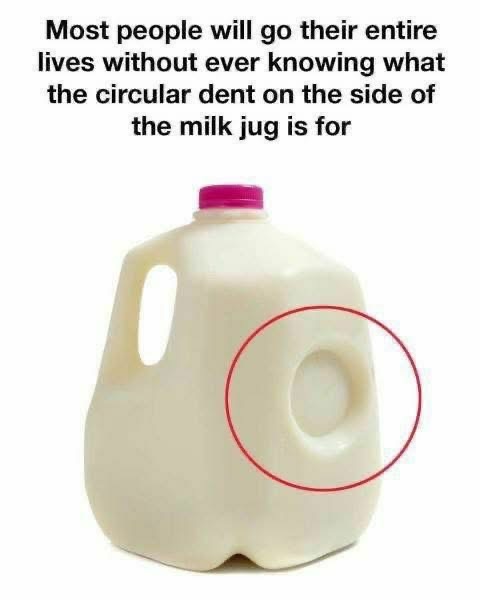
- For many people, the small circular indent on the side of a milk jug goes completely unnoticed. But recently, a social media post brought attention to this mysterious feature, sparking a flood of theories. One post even claimed, “Most people will go their whole lives without ever knowing what the circular indent on the side of the milk jug is for.”
So, what’s the truth behind this curious little bump?
Popular Theories About the Milk Jug Indent
Social media users had plenty of ideas.
Cory Anderson suggested, “the milk is going bad when it pops out.”
Another commenter guessed it might have to do with cold weather and expanding cartons.
Andrew Serpico added, “the bubble gives the milk somewhere to expand to so it won’t bust the carton if you freeze it.”
While some of these ideas sound logical, they don’t quite explain the full story.
A Design That Serves a Purpose
According to The Dairy Alliance, that circular indent—often called a mold mark—is more than just a visual quirk. It actually strengthens the container so it can safely hold the liquid inside. The indent also plays an important role in ensuring the correct amount of milk is added during the filling process.
And no, despite some online rumors, the indent has nothing to do with spoiled milk. The Dairy Alliance has confirmed that the indent won’t suddenly pop out when milk is too old—although that would be a handy feature in a world filled with confusing expiration dates!
How It Adapts to Temperature
Interestingly, the size of the indent can vary depending on the season. According to Food Republic, milk jugs are often made with larger indents in the summer months. Why? Because heat can cause plastic to expand and shift. A slightly larger indent allows the jug to adjust without causing leaks or overflow.
In colder weather, the indent may be smaller, but don’t worry—you’re still getting the same amount of milk. It’s just the plastic adjusting to seasonal temperatures to help keep your milk fresher and safer.
Improving Production and Customer Satisfaction
This clever design doesn’t just help the milk—it helps the manufacturers, too. A 2017 report by product technologists Lauren Joshi and John Cowan noted that milk bottles made from high-density polyethylene (HDPE) tend to shrink slightly after they’re formed. This shrinkage can lead to underfilled bottles and frustrated customers.
The indent solves that problem by making room for this natural shrinking. It helps prevent leaks, avoids messy spills, and ensures each bottle still looks full and appealing on store shelves.
So, What’s the Bottom Line?
The next time you grab a jug of milk, take a closer look at that simple circular indent. Far from being random, it’s a smart and thoughtful design choice. It reinforces the structure of the jug, adapts to changes in temperature, supports efficient production, and helps keep you and your kitchen mess-free.